

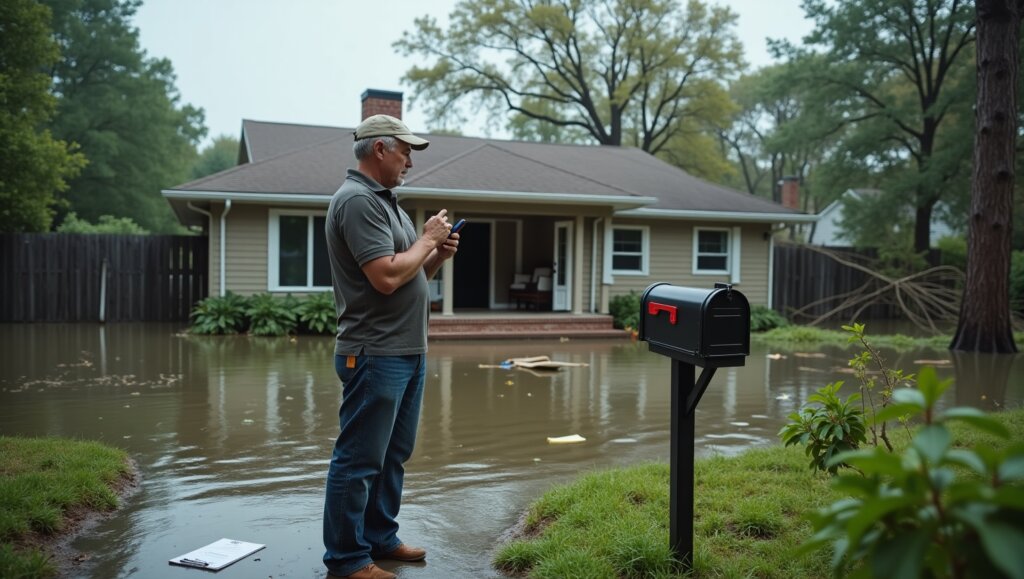
After a storm floods a home, the first things you do shape how smoothly the claim goes. The flood insurance claim steps come in this order:
- Stay safe and stay out until officials say it is clear.
- Report the loss to your insurer or agent.
- Photograph and list the damage before cleanup.
- Protect the property from more damage and keep receipts.
- Keep damaged items, or samples of them, for the adjuster.
- Meet the adjuster and go over the estimate.
- Send a signed, sworn proof of loss, generally within 60 days.
Each step is explained below. If no water has come in yet, this is the moment to check your flood coverage before you need it, because a claim can only be as good as the policy behind it.
Why Following the Flood Claim Steps Is Essential
1. Safety comes first: floodwater and damaged utilities can be dangerous.
2. Documentation drives the claim: photos, lists, and receipts show what was lost.
3. Deadlines are real: a signed, sworn proof of loss generally must be sent within 60 days of the loss.
4. Early action limits damage: reasonable steps to protect the property help prevent further loss.
Flood Insurance Claim Steps, One by One
1. Stay safe first: stay out of flooded areas until officials say it is safe.
2. Report the loss promptly: contact your insurer or agent as soon as it is safe, and ask what the policy requires next. The insurer assigns an adjuster to inspect the property.
3. Document the damage: take flood damage photos and video before cleanup, with wide shots and close-ups, and write down every damaged item. For appliances and electronics, note or photograph the make, model, and serial number.
4. Protect the property: take reasonable steps to limit more damage, often called mitigation, such as moving undamaged items to a dry place, and keep every receipt. Do what you can to stop mold from growing and spreading, because NFIP policies do not cover mold damage.
5. Keep damaged items: hold on to them until the adjuster has seen them, unless they are unsafe. Items that are a health risk, such as spoiled food or soaked pillows, can go once they are photographed. For things like carpet, flooring, and curtains, keep a sample.
6. Meet the adjuster: show every area of damage to the building and the contents, and hand over your photos and lists. The adjuster prepares a damage estimate, so read it carefully and say so if something is missing.
7. Send the proof of loss: this is your signed, sworn statement of the amount you are claiming, with documents that support it. It generally must be submitted within 60 days of the loss. FEMA sometimes extends this deadline after major disasters, so follow the adjuster’s letter and your policy.
Working With the Adjuster
The adjuster is the person who inspects the damage and sends a recommendation to the insurer. Fraud is common after a disaster, so FloodSmart, FEMA’s flood insurance site, advises asking to see the adjuster’s Flood Control Number card, which shows that the adjuster is authorized to work on NFIP claims. Ask for the adjuster’s contact details as well.
A few questions are worth asking at that first meeting:
- Which parts of the damage fall under building coverage and which under contents coverage?
- What documents are still needed from you, and by when?
- Is an advance payment available? FEMA allows advance payments on flood claims during major flood events, and any advance is deducted from the final payment.
You may start repairs before the payment arrives, but talk to your agent or adjuster before you sign a contract with a cleaning or repair contractor.
What to Expect From the Policy and the Payment
Building coverage and contents coverage are bought separately and have different deductibles, so check what you bought for each. Contents are covered only if you bought contents coverage. A flood during the waiting period is typically not covered, since a 30-day waiting period normally applies after purchase.
Three more points help set expectations:
- Timing: FloodSmart says it can take four to eight weeks before a claim is finalized and paid, and in rare cases longer.
- The check: if the home has a mortgage, the claim check is written to you and your mortgage company, so call the lender early.
- Living costs: an NFIP policy does not pay for temporary housing or additional living expenses while the home is repaired.
The amount paid depends on your policy’s coverage and on the documentation you give the adjuster, which is why step 3 matters so much.
What Can Slow a Flood Claim Down
- Missing records: no photos, no list of damaged items, and no receipts.
- Missed deadlines: the proof of loss arriving late.
- Early disposal: throwing out damaged items before they are photographed or the adjuster has seen them.
- Wrong policy: assuming the homeowners policy covers flood. It does not, as explained in why homeowners insurance does not cover flood.
If the Claim Is Denied or the Amount Looks Wrong
A denial letter is not the end of the road. FloodSmart says a policyholder can appeal if some or all of a claim is denied, or if the amount is in dispute. The options include talking with the adjuster or the insurer and filing an appeal with FEMA, which must be sent within 60 days of the date of the denial letter. Start with the insurer’s claims department, which can connect you with a claims examiner.
Separately, if the president declares a disaster, flood damage can qualify you for federal disaster assistance, and you can apply for it in addition to your insurance claim.
Get Ready Before the Next Storm
The flood insurance claim steps go faster when the paperwork already exists. Keep a home inventory, store your policy where you can reach it, and save your agent’s number. Buy flood coverage early, because of the waiting period. To see what your address means, read flood zones and insurance rates. For how the program works, see FEMA and the National Flood Insurance Program. If wind damaged the home in the same storm, that part is a separate claim on the home policy, covered in home insurance after a natural disaster.
| Quick Facts | Details |
|---|---|
| First priority | Safety |
| Report | As soon as it is safe, to your insurer or agent |
| Document | Photos and video before cleanup, plus a list of damaged items |
| Proof of loss | Generally due within 60 days of the loss, and FEMA sometimes extends it |
| Building and contents | Separate coverages with separate deductibles |
Frequently Asked Questions
How soon should I report flood damage?
As soon as it is safe to do so. Prompt notice gets the process started, and the policy spells out what is required, so read it or ask your agent what the next step is.
What is a proof of loss?
It is your signed, sworn statement of the amount you are claiming, with documentation to support it. For flood policies it generally must be submitted within 60 days of the loss, and FEMA sometimes extends that after major disasters.
Should I throw away damaged belongings?
Not until they are documented, and for most items not until the adjuster has seen them. Items that are a health risk can be thrown away after you photograph them. Keep samples of carpet, flooring, and curtains, and ask your insurer what else to hold on to.
Does flood insurance cover my belongings?
Contents coverage is separate from building coverage and has its own deductible, so belongings are covered only if you bought contents coverage. Read your policy to see what you have.
How long does a flood insurance claim take?
FloodSmart says it can take four to eight weeks before a claim is finalized and paid, and in rare cases longer. Complete records and a proof of loss sent on time help keep it moving. Ask your adjuster whether an advance payment applies.
What if the flood happens soon after I bought the policy?
A 30-day waiting period typically applies between purchase and the effective date, with exceptions such as a purchase tied to a mortgage loan. A flood during the waiting period is typically not covered.
Myths About Flood Claims
Myth: There is plenty of time to file. Prompt reporting matters, and a signed, sworn proof of loss generally must be submitted within 60 days of the loss, though FEMA sometimes extends the deadline after major disasters.
Myth: Everything should be cleaned up before the adjuster arrives. Document first, and keep damaged items until the adjuster has seen them, unless they are unsafe. Reasonable temporary protection is fine, and receipts matter.
Myth: Homeowners insurance will pay for flood damage. Flood is excluded from standard homeowners policies, which is why a separate flood claim is needed.
Author’s note: Keep a folder, paper or digital, with your policy, your agent’s phone number, and a home inventory before any storm arrives. If flooding has already happened, start with safety and the first call to your insurer. For questions about flood coverage for next time, talk to a licensed InsureDirect agent.
Why Choose InsureDirect
Help before the storm: the easiest flood claim starts with the right policy, and an InsureDirect agent can answer questions about flood coverage before the water rises.
Since 1992: InsureDirect has been an independent insurance agency for more than 30 years.
Your price, not an average: cost changes with your details. Get a quote built on them, or call (800) 807-0762 to speak with a licensed agent.
Get a Flood Insurance Quote and put flood coverage in place before the next storm.
Sources
FloodSmart, How to start a flood insurance claim, Flood insurance 101 and What you need to know about buying flood insurance. Federal Emergency Management Agency, NFIP claim forms for policyholders. Insurance Information Institute, Which disasters are covered by homeowners insurance?.
This article is for general educational purposes and is not a substitute for your policy’s actual terms and conditions. Coverage details, limits, and exclusions vary by policy and by state. Always review your specific policy documents or speak with a licensed agent before making coverage decisions.
Reviewed by Michael E. Dortch, President & Managing Agent, Combined Insurance Group, Ltd. Last updated: November 2026.
