

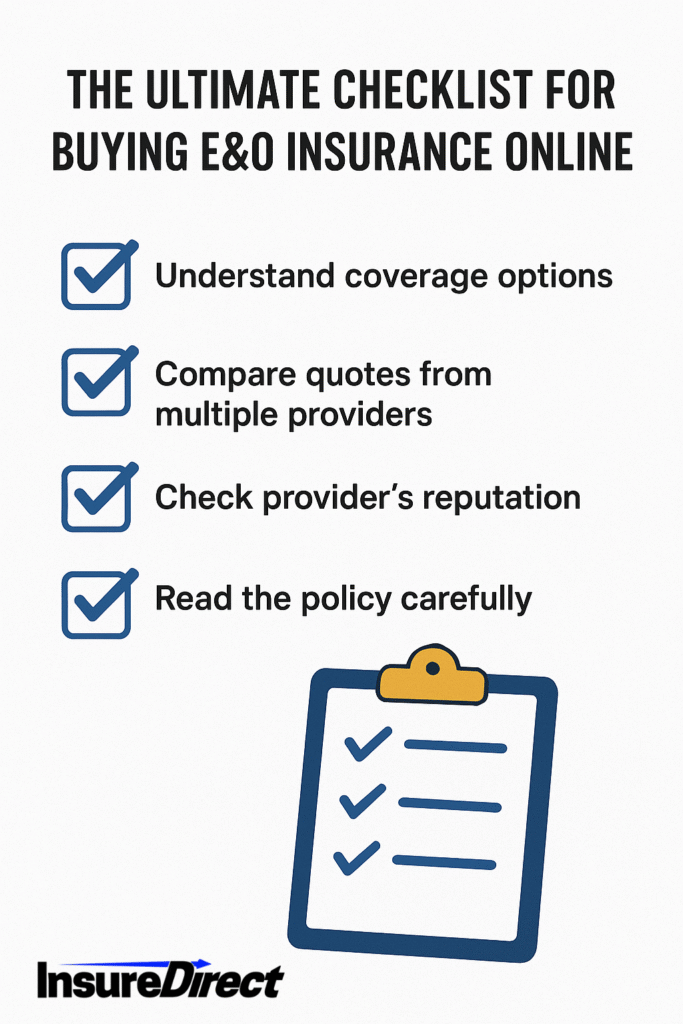
Understanding E&O Insurance Before You Click “Buy”
Step 1: Evaluate Your Risk Exposure
- Healthcare Professionals: Physicians, therapists, and counselors are at risk of malpractice claims. Even small mistakes can lead to monumental claims.
- Technology Professionals: Software developers and IT consultants may be liable for bugs, data loss, or downtime.
- Financial Professionals: Accountants, financial advisors, and planners face exposure if errors lead to client losses.
- Legal Professionals: Lawyers and paralegals must guard against missed deadlines and inaccurate legal advice.
Note: Risk assessment is not optional; it’s the foundation of smart online insurance buying.
Step 2: Determine Necessary Coverage Levels
- Revenue & Client Base: More clients or bigger contracts usually mean higher potential liability.
- Industry Standards: Some professions require minimum coverage amounts. Ignoring this could void contracts.
- Contractual Obligations: Many clients ask for proof of E&O coverage before hiring you.
Step 3: Compare Online Providers
- Reputation: Check claims handling history, customer reviews, and feedback.
- Claims Process: Some platforms automate claims; others require extensive paperwork.
- Customization: Can you adjust deductibles, coverage limits, and retroactive periods online?
- Hidden Exclusions: Fine print matters — subtle exclusions could void your policy.
Warning: Online platforms often hide key details. Always read the fine print before purchasing.
Step 4: Understand Policy Components
- Claim Coverage Periods: Some policies cover incidents only during the active term; others offer retroactive coverage. Misreading this could leave gaps.
- Defense Costs: Quality E&O policies pay for legal defense, even for baseless claims.
- Settlement Limits: Ensure your limits match the scale of potential liability.
- Exclusions: Intentional wrongdoing, criminal acts, or contractual liability are commonly excluded.
Subtle detail: Missing a tiny exclusion can cost thousands. Many users don’t notice until it’s too late.
Step 5: Consider Your Budget
- Type of profession.
- Years of experience.
- Number of employees.
- Revenue size.
- Claims history.
Step 6: Seek Policy Flexibility
- Annual coverage adjustments.
- Flexible deductibles.
- Optional add-ons (cyber liability, project-based coverage).
Step 7: Read Reviews and Testimonials
- Complicated online claims submission.
- Slow customer service.
- Confusing policy language.
- Unexpected exclusions.
Fun fact: Many professionals skip reviews and regret it later. Don’t make the same mistake.
Step 8: Have Documentation Ready
- Professional license or certification.
- Claims history.
- Revenue details.
- Business description.
Step 9: Understand the Renewal Process
- Check if the provider allows easy renewals.
- Review your policy annually to adjust limits or add endorsements.
- Maintain records of activities and claims history.
Pro tip: Automatic renewals are convenient, but they can lock you into outdated coverage if you’re not attentive.
Step 10: Consider Cyber & Data Liability
- Freelancers and small businesses increasingly face data mishandling claims.
- AI-powered services can be held responsible for algorithmic mistakes.
Ignoring this can create a massive coverage gap.
Step 11: Watch Out for Hidden Fees
- Processing fees.
- Claims service charges.
- Endorsement add-ons.
Step 12: Make an Informed Purchase
- Evaluate risk exposure
- Verify coverage limits and exclusions.
- Confirm policy flexibility and renewal options.
- Check total costs, including hidden fees.
- Complete your application accurately.
Don’t rush. Convenience is tempting, but mistakes online can cost thousands.
Step 13: Extra Tips for 2025
- AI Usage Disclosure: Insurers increasingly ask about AI in your work. Be honest — nondisclosure can void claims.
- Remote Work Coverage: Policies may need endorsement if work is done remotely for clients globally.
- Multi-Project Policies: Freelancers juggling several clients might need separate project coverage.
- Risk Management Programs: Some providers give discounts for risk assessment or ongoing training.
Small adjustments now save big headaches later.
Final Thoughts
nsureDirect.com
Corporate Home Office
618 South Broad Street
Lansdale, Pennsylvania 19446
Email: contact@insuredirect.com
Phone: (800) 807-0762 ext. 602
Keep your home safe and secure with complete protection from InsureDirect—because your home deserves nothing less than the best.