

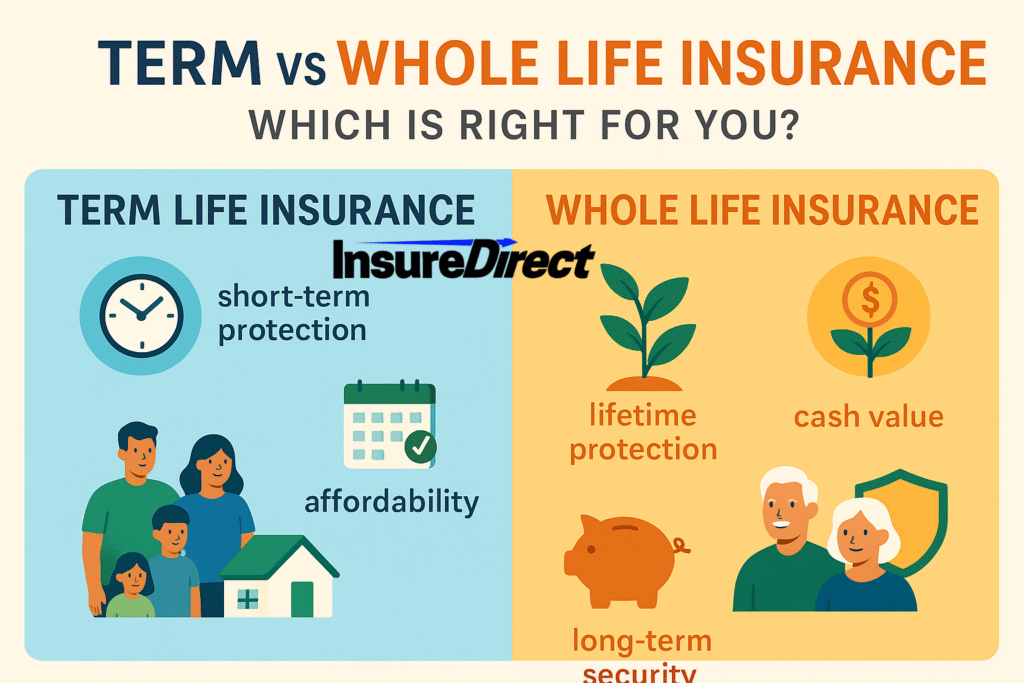
Life insurance? Confusing sometimes, but crucial. Term, whole life, oh my! Some people need temporary coverage, others want protection forever. Choosing wrong can hurt financially.
Term Life Insurance – Quick Coverage
Term life insurance gives protection for a set period—10, 20, or 30 years maybe. If you pass during the term, your beneficiaries get a payout. If not? Nothing happens.
-
Cheap, especially if you’re young.
-
Duration fixed; ends eventually.
-
Death benefit only, no savings or cash value.
Example: You’re 30, buy a 20-year term. Mortgage safe, kids covered. After 20 years, reevaluate or pay more.
Whole Life Insurance – Lifelong Security
Whole life insurance lasts for your whole life, as long as premiums are paid. Cash value grows slowly, premiums mostly fixed. But expensive—often much higher than term.
-
Lifetime coverage, no expiration.
-
Cash value accumulation, like a forced savings account.
-
Predictable premiums.
-
Costly; requires budget planning.
Example: Buy at 30. Covered forever. Cash value exists. Growth slow, but security guaranteed.
Term vs Whole Life – Main Differences
| Feature | Term Life Insurance | Whole Life Insurance |
|---|---|---|
| Coverage Duration | Fixed (10–30 years) | Lifetime, no expiration |
| Premiums | Lower, affordable | Higher, consistent |
| Cash Value | None | Accumulates over time |
| Flexibility | Sometimes convertible | Limited flexibility |
| Ideal For | Short-term obligations | Long-term security & investment |
Pros & Cons of Term Life
Pros:
-
Affordable for young adults or families.
-
Easy to understand, no complexity.
-
Matches temporary obligations like mortgages or tuition.
Cons:
-
Ends eventually; renewal costs often high.
-
No cash value; cannot borrow or save.
-
Premiums increase if renewed after term expires.
Pros & Cons of Whole Life
Pros:
-
Lifetime coverage ensures protection for life.
-
Cash value grows slowly; usable for emergencies or savings.
-
Premiums stable over time.
Cons:
-
High cost.
-
More complex than term; fine print matters.
-
Cash value grows slowly compared to other investments.
Who Should Choose Term Life?
Best for:
-
Parents with children.
-
Homeowners with mortgages.
-
People needing affordable short-term coverage.
Keywords: affordable term life insurance, term life benefits, best term life policies
Who Should Choose Whole Life?
Best for:
-
People seeking lifelong coverage.
-
Those interested in cash value accumulation.
-
Able to afford higher premiums comfortably.
Keywords: whole life insurance advantages, permanent life insurance, life insurance with cash value
Factors to Consider
Before choosing term vs whole life:
-
Budget: cheap now vs expensive now but lifetime coverage.
-
Financial goals: temporary protection or lifelong security?
-
Dependents: who relies on your policy?
-
Investment potential: cash value grows slowly.
-
Age & health: young and healthy = lower premiums.
Combining Term and Whole Life
Hybrid approach works. Term for temporary coverage, whole life for lifelong protection. Cost-effective, balanced.
Example: 30-year-old buys 20-year term for mortgage + small whole life for lifetime security. Coverage balanced.
Keywords: hybrid life insurance, combination policies, term + whole life
Conclusion
Term or whole life? Depends on goals:
-
Term life: affordable, short-term needs.
-
Whole life: lifelong coverage, cash value, legacy planning.
-
Hybrid: best of both worlds.
Choose carefully; family’s financial security depends on it.
Contact InsureDirect
InsureDirect.com
Corporate Home Office
618 South Broad Street
Lansdale, Pennsylvania 19446
Email: contact@insuredirect.com
Phone: (800) 807-0762 ext. 602
Keep your home safe and secure with complete protection from InsureDirect—because your home deserves nothing less than the best.