

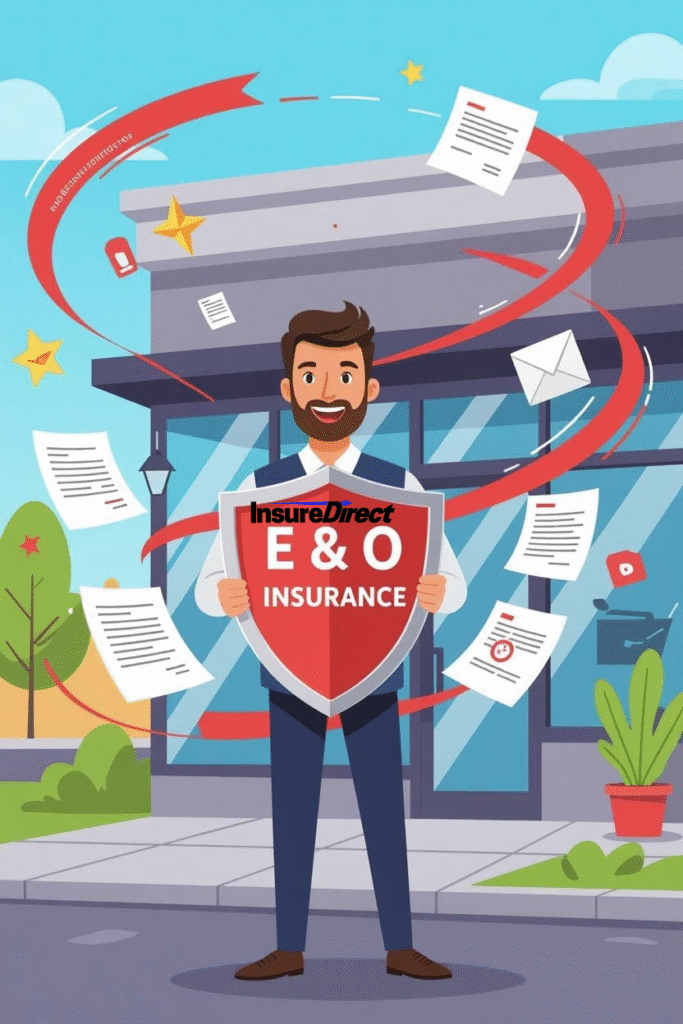
Running a small business is often like juggling flaming torches—you think you’ve got it under control, and then suddenly, a minor mistake explodes into a major problem. Errors happen. A missed deadline, a miscalculated report, or advice that doesn’t land perfectly—small issues can spiral into expensive and time-consuming problems. That’s where Errors & Omissions (E&O) insurance comes in. It’s more than just a policy; it’s your business’s safety net when things go wrong.
In 2025, small businesses face increasing legal and financial exposure. Mistakes are inevitable, but E&O insurance ensures that your company can withstand them without risking bankruptcy or client trust.
What is E&O Insurance?
Errors & Omissions Insurance, also called professional liability insurance, protects businesses from financial losses arising from mistakes or negligence while providing professional services. Even if you triple-check your work, human error is unavoidable.
- Legal expenses.
- Settlements.
- Court-awarded damages.
Essentially, it cushions the blow when a client claims financial loss due to your professional services—or lack thereof. Unlike standard business insurance, which protects against property damage or fire, E&O insurance is laser-focused on mistakes, negligence, or omissions in professional services.
Common Scenarios Where E&O Insurance Helps
Even minor errors can escalate into major claims. E&O insurance offers protection in situations such as:
- Negligence Claims: If a client believes you failed to meet your duties properly, E&O covers legal costs.
- Errors in Work: Incorrect data entry, misadvised strategy, or a flawed report could trigger lawsuits.
- Breach of Contract: Failing to fulfill contract terms may result in legal action.
- Delayed Deliverables: Missing deadlines that cause client losses can lead to claims.
- Misrepresentation Claims: If a client alleges that you didn’t deliver promised results, E&O insurance covers defense costs.
- Unfinished Work: Abandoned projects or incomplete services may trigger financial claims.
- Even Frivolous Lawsuits: Legal defense costs are covered even if the claim lacks merit.
What E&O Insurance Does Not Cover
E&O insurance is comprehensive for professional errors, but it has limits:
- Criminal Activity: Illegal actions aren’t covered.
- Property Damage or Physical Injury: Typically covered by general liability insurance, not E&O.
- Workplace Issues: Employee disputes, harassment, or discrimination claims require other insurance policies.
For these areas, additional coverage is necessary to ensure complete protection.
Who Needs E&O Insurance?
E&O insurance isn’t legally mandatory for all businesses, but it is highly recommended for companies providing professional advice or services. If your work could result in financial loss for a client, coverage is essential.
Professions That Benefit Most from E&O Insurance:
- Consultants: HR, marketing, IT, or management consultants can significantly impact client finances.
- Accountants & Bookkeepers: Financial reporting errors can have substantial consequences.
- Real Estate Agents: Transaction mistakes can lead to lawsuits or lost commissions.
- Attorneys & Financial Advisors: Legal or financial missteps can create major claims.
- IT Professionals: Developers or cybersecurity specialists face exposure from technical errors.
- Architects & Engineers: Design mistakes that cause structural issues may result in lawsuits.
- Personal Service Providers: Even personal trainers, dietitians, or stylists can face claims if services cause injury or financial harm.
In many cases, larger clients will require proof of E&O coverage before engaging your services—it’s a trust signal as well as protection.
Cost of E&O Insurance for Small Businesses
E&O insurance is generally affordable. On average, small businesses can expect to pay:
- $735 annually, or about.
- $61 per month.
Costs vary depending on several factors:
- Industry & Risk Level: Legal, financial, and consulting professions often pay more.
- Location: State and local regulations affect insurance premiums.
- Business Size: More employees or higher revenue can increase premiums.
- Coverage Limits: Higher limits equate to higher costs.
- Claims History: Prior claims may lead to elevated premiums.
Pro Tip: Pay premiums annually rather than monthly, or bundle E&O with general liability insurance for savings.
E&O Insurance vs. General Liability Insurance (GLI)
Understanding the difference is critical:
- General Liability Insurance: Covers property damage or bodily injury. For example, if a client trips in your office or you accidentally damage client property, GLI protects you.
- E&O Insurance: Covers professional mistakes leading to financial loss. For instance, missed deadlines or poor advice that costs a client money are covered by E&O.
Best Practice: Combine E&O and GLI for comprehensive protection. Together, they cover both operational and professional risks.
Choosing the Right E&O Policy
Selecting the right policy requires careful consideration:
- Risk Assessment: Analyze the worst-case scenario for your business.
- Coverage Limits: Ensure limits are adequate for potential claims.
- Exclusions: Review policy fine print to understand what’s excluded.
- Optional Add-ons: Consider extras like copyright protection or worldwide coverage.
- Insurer Reputation: Choose a provider with a strong claims history.
- Comparison Shopping: Get multiple quotes to find competitive rates.
- Annual Review: Update coverage as your business evolves.
Real-Life Scenarios Where E&O Insurance Protects
- A freelance marketing consultant sends an email to the wrong client list, causing revenue loss. E&O covers legal costs and settlements.
- An IT consultant’s coding error triggers financial loss for a client. E&O covers defense expenses.
- An architect miscalculates building requirements, causing project delays. Legal fees and settlements are handled by E&O coverage.
Additional Benefits of E&O Insurance
- Peace of Mind: Focus on serving clients, not fearing lawsuits.
- Client Trust: Demonstrates professionalism and preparedness.
- Industry-Specific Coverage: Policies can be customized to meet your field’s unique risks.
- Coverage for Past Work: Some policies even protect work completed prior to purchasing the insurance.
Tips to Maximize E&O Insurance Benefits
- Maintain meticulous records of communications, deliverables, and contracts.
- Implement quality control processes to minimize errors.
- Educate employees about risk exposure and compliance standards.
- Regularly review and update contracts to reduce misunderstandings.
- Combine E&O with cyber liability coverage for IT-related businesses.
E&O Insurance for the Modern Small Business
In 2025, small businesses face increasingly complex legal and financial environments. Clients are more aware of risk and may require proof of insurance before engagement. E&O insurance is no longer optional for professional service providers—it’s a strategic investment in business continuity and credibility.
By carrying E&O insurance, businesses not only protect themselves financially but also position themselves as reliable, trustworthy, and professional in a competitive marketplace.
Getting Started with E&O Insurance
Protect your small business today:
- Website: InsureDirect.com
- Headquarters: 618 South Broad Street, Lansdale, PA 19446
- Email: contact@insuredirect.com
- Phone: (800) 807-0762 ext. 602
E&O insurance allows small businesses to operate confidently, knowing that mistakes don’t have to be catastrophic. Safeguard your business, reputation, and future financial security.
SEO Keywords Naturally Included
- E&O insurance for small businesses
- professional liability coverage
- errors and omissions protection
- E&O insurance 2025
- small business insurance tips
- professional mistakes insurance